
Key Stage 3
Unlock your full potential in English
Learn how to paragraph effectively, what to look for in a text, how writers create interesting characters and how to write your own amazing stories.
Get Started TodayLearning the Essential Stage 3 Skills
This course presents a mix of all the skills that are used in KS3 English work. Key Stage 3 is largely viewed as the fun playground where a student exercises all the skills that they will eventually use in their GCSEs.
We focus on many skills that are valuable for studying generally, note-taking, further research, labelling, annotating, prioritising, inferring, linking ideas and wider critical skills. Students will also develop their reading skills, which will involve understanding how both language and structural devices get used in a story. This will of course, also include guidance on how to structure paragraphs and how to approach a text, so that the student knows what to include in a paragraph in order to answer the question.
For writing, students will learn what devices to include in their creative writing skills and how to structure and use devices for their persuasive writing. Whilst this may seem like a formidable list, a well-crafted teaching session will seamlessly use several of these skills, so developing the student as they go.


Take Time to Pause
Go back and clarify what is being asked of you. You are in control of how fast you take in the learning!

Learn to Your Own Ability
For anything that is more complex, exemplars are provided; issues get dealt with on the videos, before they even come up; take the opportunity to stretch yourself each session with a ‘stretch’ exercise.

Bring Fun to Your Learning
Enjoy the opportunity to make learning texts fun and informative. Enjoy looking into interesting or amazing language, descriptions of famously memorable characters.
Breaking Down Key Stage 3
English in Keystage 3, is a slow road that will eventually lead to students being ready for tackling their GCSEs. The kind of things that students study should therefore include texts that are appropriate for their age, with tasks that challenge and improve students’ ability to read the text (understand and analyse) and write in a way that is descriptive or persuasive.
In KS3 students usually get the opportunity to learn how to analyse - what to look for in the language, and what the relevance of the language (or structure) has to the text’s meaning. This is of key importance, and is broken into simple steps that make this process manageable. Learning how to write analysis in tight, concise paragraphs is always a concern in KS3, and this becomes a focus in nearly every single session.
Get expert help
Learn to enjoy English, made to be fun and affordable with our comprehensive videos and teaching slides, which you can access in your own time.
Get Key Stage 3 Sorted TodayHow Our Course Works
Before a student starts, they can decide which topic they would like to focus on. Each taught session has a high-level set of slides to follow (much like students would have in a class), and these topics are clearly labelled ‘Woman in Black - session 6’ or ‘Macbeth - Act 1 scene 3 - ambition’.
Each session also has an accompanying video to play alongside the slides, where each stage of the learning is broken down. Like an in-person tutoring session, there are exercises that build up to either a greater knowledge, or an opportunity to write creatively, or a chance to create analytical paragraphs from scratch.
There are moments to pause, before moving to the next stage, or suggestions of what could be returned to, if need be. The challenge is always that there isn’t a real person in front to keep a check on the learning. This is why, at most stages, there is a starter sentence all the way up to a full exemplar paragraph, to show how it can be written and structured.
The final exemplar is colour-coded and labelled, so that students can see what should have been included, even showing (in GCSE) what would have fulfilled which GCSE Assessment Objective.
Students are encouraged to colour-code their own work, then see what might need improving, effectively ‘marking’ and improving their own work. Here, depending on the student’s confidence, a second set of eyes is encouraged to look over work and assess what could be improved.
The Texts We Cover
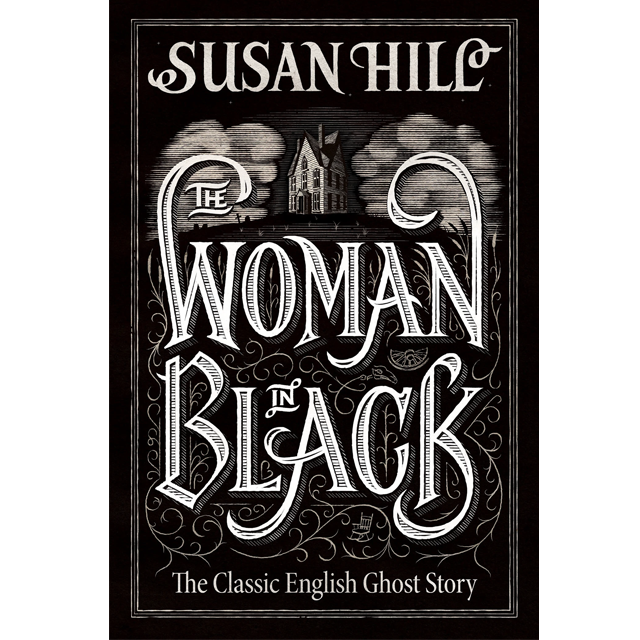
Susan Hill’s wonderfully Gothic novel is an absolute page turner! We look at how tension gets created, how descriptive writing is used and how the Gothic genre is presented within this story. Students are given the chance to try out their creative writing, trying out newly taught structural techniques, they also get to try writing to create tension.
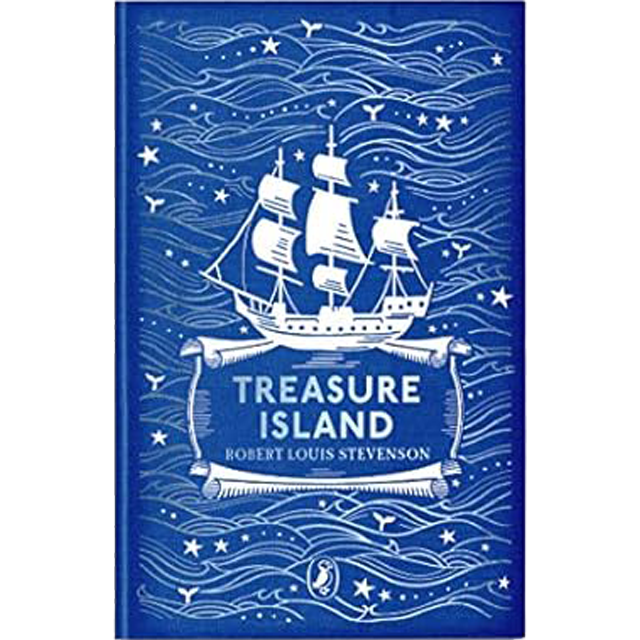
Enjoy the fun of pirate rampaging all over first, the Benbow Inn, then all over Treasure Island! We look at how some of the best known pirate characters: Long John Silver, Billy Bones and Blind Pew are presented and the language used to describe them. We make maps of our own islands, and look at how the setting is presented. There are several opportunities to practise descriptive writing, using language devices such as pathetic fallacy and personification.
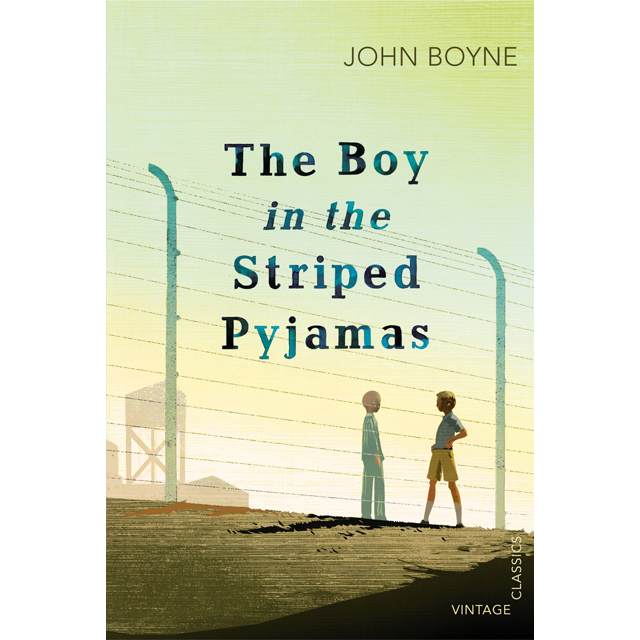
This immensely moving novel looks not only at the novel, but the social and historical context that the novel refers to. We analyse the language used in order to understand the characters better, We also look at relationships between the characters - how Bruno’s friendship with Shmuel is reflected, his closed relationship with his father, his dislike of Kotler and his quiet sympathy for Pavel. There is opportunity for individual extended research into the aspects of the Holocaust, in order to understand the novel better.
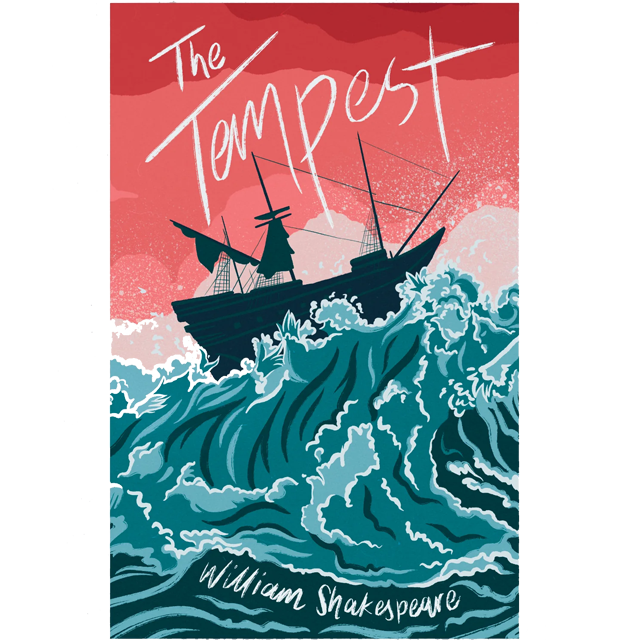
A reader-friendly, first stab at reading the Bard! This is an opportunity to enjoy all the fun and magic of the play, whilst looking at the wider themes of freedom and slavery and racism. Students will look at the characters and how they relate to each other. There will be a focus on how language is used to convey meaning, whether it be how Caliban is viewed by Prospero, to the language used by Miranda to express the love she has for Ferdinand. There is scope for extended research on Shakespeare and the historical context in which he wrote. There is also opportunity to practise writing skills with several different story opportunities and several different language and structure devices.
War Poetry
Here, students learn the aching beauty behind many of the most famous war poets of the First World War. We will look at the language and structure devices, and how these are used to create such strong imagery. There is also, opportunity for students to try out their own poetry writing. Extension opportunities are also available for further research and study of the conditions the poets wrote in, and the historical significance of these poems.
Transactional Writing
These sessions focus purely on writing being used to inform or persuade. We take time to look at what writing devices frequently get used - rhetorical questions, lists of three etc. We look at how students can create forms: letter, speech, article and how the forms need to be shaped in different ways. Students then get the opportunity to try various writing tasks for themselves, with the aid of trusty exemplars along the way.
Key Stage 3
£300
You will receive
- Access to the full Key Stage 3 library of resources, including
- 28 Unique video lessons
- 28 Accompanying handouts
- Support via email
Cut the High Costs of Tutoring Today
An hour of a tutor’s time is now around £40. For £300 per year, you can have access to a whole GCSE course (or KS3 year’s worth of content). This includes sessions to teach both the Language papers, and all the key texts that get taught within Literature. Language sessions address the skills needed to structure paragraphs, addressing the exam questions and how to develop the skills needed for Creative or Transactional Writing. For Literature, it addresses the major texts taught, addressing the usual focus of study, ie, looking closely at characters, how they relate to each other, and delving into the main themes or issues that the text raises, and the context that this text was written in.