Mr Birling: The Villain We All Love to Hate
Jul 09, 2026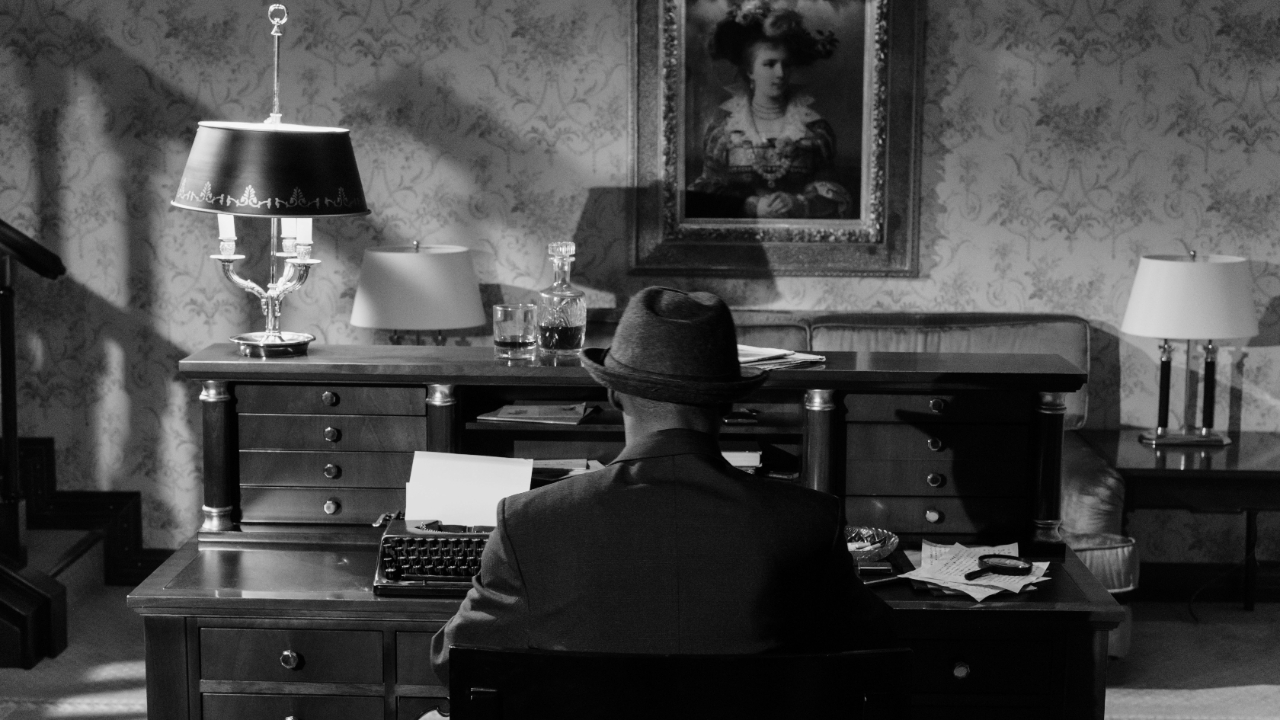
For any GCSE student taking English Literature, there's a very good chance you're studying An Inspector Calls. That's not to say schools don't have plenty of other options — Journey's End, Lord of the Flies, Anita and Me, A Taste of Honey, DNA, and Hobson's Choice, to name but a few of the texts that fit within the modern/post-1914 British Literature question posed by many of the main exam boards. It's just that An Inspector Calls has everything going for it.
The play is, first and foremost, really good and engaging. It has a clear premise, rich social and political context, a clear moral, a twist at the end, and very engaging characters — all wrapped up in something short and sweet (for teachers, that's a big plus).
Meet the Villain
The character we first get to know, in loud and "portentous" detail, is the villain of the play: Mr Birling. He's a man made good in life — middle class (which matters a great deal in this play), married slightly above himself, and now a man of wealth, power, and influence.
Within a few pages of the play starting — even though it's Sheila and Gerald's engagement being celebrated — Birling is the one running the show. He spends much of their time talking about what he thinks matters. Money and influence sit high on his list of priorities, made clear in the toast he offers the family:
"Perhaps we may look forward to the time when Crofts and Birlings are no longer competing but are working together – for lower costs and higher prices."
A Man Who Knows His Place — Sort Of
It's worth remembering that although Birling spends most of the play looking like the man with all the power and privilege, even he has a spot in the early twentieth-century pecking order. Speaking privately with Gerald Croft, his soon-to-be son-in-law, he reveals this understanding:
"Lady Croft – while she doesn't object to my girl – feels you might have done better for yourself socially."
Dramatic Irony: Setting Up the Fall
Talking with his family, Birling makes claims that the audience knows to be false. He dismisses the idea of war breaking out (in 1912, no less) — a claim made painfully wrong by the outbreak of World War I in 1914, and one that surely got a laugh from the 1945 theatre audience. Not only does he think war unlikely, he insists:
"Just because the Kaiser makes a speech or two ... you'll hear some people say that war's inevitable. And to that I say – Fiddlesticks!"
Even more famous — perhaps every student's favourite quote to learn — is his remark about the Titanic: "unsinkable, absolutely unsinkable." This dramatic irony, where the audience knows something the characters don't, is deliberate. It plants the first seeds of doubt about Birling's judgement, doubt that grows as the play reveals just how poor his decisions have been elsewhere, and how serious the consequences. This shapes how we view him once the Inspector arrives with the news — delivered slowly, starting with Birling — that each of them played a part in Eva Smith's downfall and suicide.
The First Domino
It matters that Birling was the first to wrong Eva Smith. The Inspector's cause-and-effect approach makes clear that without Birling's initial wrongdoing, none of what followed would have happened:
"What happened to her then may have determined what happened to her afterwards, and what happened to her afterwards may have driven her to suicide. A chain of events."
His responsibility for Eva losing her job is made worse by how little it would have cost him to simply pay his workers fairly.
No Room for Responsibility
Perhaps the worst part of Birling's involvement is his sheer, consistent refusal to acknowledge any responsibility. Every character wrongs Eva in some way, but Sheila and Eric come to accept their guilt fully. Birling never does. This comes through most clearly when it looks like the Inspector might not have been a real police officer:
"The whole thing's different now. Come, come, you can see that can't you?"
But for Eric, the Inspector's credentials change nothing. His guilt remains the same. When he shouts:
"I say the girl's dead and we all helped to kill her - and that's what matters-"
— he's voicing what both he and Sheila feel: they treated Eva cruelly, and that fact doesn't disappear just because the man who exposed it might not have been a policeman.
Reader Response and Writer's Intention
To score top marks, students need to go beyond plot and speak to Reader Response and Writer's Intention — how do you feel about this character, and why did the writer build him this way?
Let's start with the man behind Birling: J.B. Priestley. It must have taken real self-control not to slip his own name into the list of writers Birling disparages at the start of the play.
Priestley was a left-wing writer — his contemporaries were, ironically, among the very writers Birling looks down on. Knowing this, it's worth considering which character most closely reflects Priestley's own values: the Inspector. For the Inspector's argument to land, he needs an opponent who represents everything he stands against.
Even with a twenty-three-year gap between the play's setting (1912) and its first performance (1945), audiences would have recognised a Birling instantly. Many had likely served under one, or worked alongside one, during a war that had begun — slowly — to erode Britain's rigid class divisions. That gap was wide enough to feel historical, making it easier to pass judgement on the characters, but narrow enough that the characters still felt real and recognisable — the kind of thing that could still happen.
This, surely, was Priestley's intention. It's striking that Birling's declaration — "A man has to mind his own business and look after himself and his own" — echoes a line from a British Prime Minister roughly forty years later: "There is no such thing as society." That stands in stark contrast to the Inspector's closing statement:
"We don't live alone. We are members of one body. We are responsible for each other."
The Inspector leaves the audience with a warning that if it goes unheeded, people will be taught their lesson "in fire and blood and anguish" — a line that must have hit a post-war 1945 audience especially hard.
The Best Bit of the Play?
Perhaps the most compelling argument for Birling's importance is this: the audience recognises the worst parts of him in people they know, in history, and in themselves — and, hopefully, tries to change. If that's true, then Birling and all his failings might just be the best part of this play.
Hopefully, the nefarious Mr Birling makes a little more sense to you now.
Get more out of your Key Stage 3&4 English with affordable, effective online tuition.
Visit our site to learn more